
Anesthesiologist · Pain Medicine · Palliative Care
Living without pain is possible
I am Dr. Daniel Galván, an anesthesiologist devoted to chronic pain management and palliative care in Guadalajara. If pain has become part of your daily life, there are more options than you have been told.
- Personalized assessment
- Outpatient procedures
- Close follow-up
Your specialist
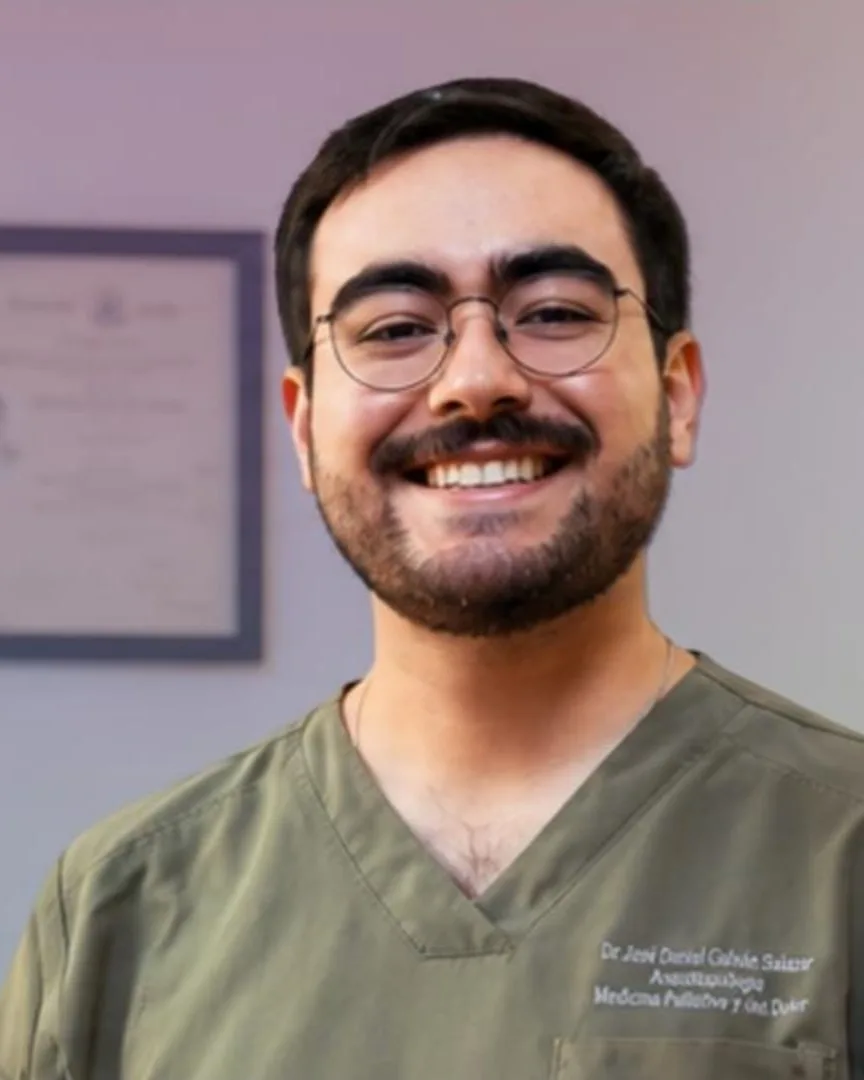
Dr. Dr. José Daniel Galván Soltero
Anesthesiologist trained in pain management and palliative medicine.
I chose to devote myself to pain because it is probably the most common reason a person loses their normal life without anyone properly explaining why. Chronic pain is not something to "put up with": it is a medical condition that can be diagnosed and treated.
My job is to find the real source of your pain and build a plan with you that combines whatever it takes — medication, interventional procedures, follow-up — so you get back what pain took from you: sleeping, walking, working, picking up your grandchildren.
In palliative care the commitment is the same, with a different goal: to accompany the patient and their family honestly, and to sustain the best possible quality of life at every stage.
Un manejo integral y especializado del dolor puede mejorar la calidad de vida.
- Anesthesiology
- Algology (pain medicine)
- Palliative medicine
What we treat
When should you see a pain specialist?
If your pain has lasted more than three months, it is no longer a passing symptom: it deserves specialized assessment.
Lower back pain
Persistent lower back discomfort that does not ease with rest or over-the-counter painkillers.
Muscle injuries and herniated discs
Pain that may travel down the leg or arm, with tingling or loss of strength.
Osteoarthritis
Joint pain and stiffness that limits walking, climbing stairs or sleeping.
Joint degeneration
Knee, hip or shoulder pain that appears with movement and keeps getting worse.
Neuropathic pain
Burning, tingling, stabbing or electric-shock sensations caused by nerve damage.
Nerve damage or compression
Pain from a trapped or injured nerve, sometimes with numbness or weakness.
Postherpetic neuralgia
Pain that lingers in the skin weeks or months after shingles.
Headache
Frequent or disabling headaches that no longer respond to usual treatment.
Cancer pain
Pain control during and after oncological treatment, at any stage.
Persistent post-surgical pain
Pain that continues long after an operation, including spine surgery.
Fibromyalgia
Widespread pain, fatigue and unrefreshing sleep over a sustained period.
Hard-to-control chronic pain
Pain lasting months or years that has already been through several treatments without result.
Did any of these sound familiar?
An assessment is the first step toward knowing where your pain comes from and what can be done.
How we help
Treatments and procedures
Every plan is built around your diagnosis. These are the tools available.
Comprehensive pain assessment
The consultation begins by understanding your pain: how long you have had it, what it feels like, what triggers it and how it is affecting your daily life. From there comes a plan made for you, not a generic treatment.
- Full clinical history
- Review of previous imaging
- Personalized treatment plan
Specialized medication management
Careful adjustment of pain medication, aiming for the greatest possible relief with the fewest side effects and with close follow-up.
- Individualized regimens
- Side-effect monitoring
- Ongoing follow-up
Nerve blocks
Precise delivery of medication near the nerve responsible for the pain. It helps identify the source of the problem and provides relief while the underlying treatment progresses.
- Outpatient procedure
- Targeted relief
- Helps confirm the diagnosis
Radiofrequency ablation
Radiofrequency energy is used to reduce the pain signal sent by a specific nerve. It is an option worth considering when pain keeps coming back.
- No open surgery
- Quick recovery
- Long-lasting relief
Image-guided interventional procedures
Procedures are performed with ultrasound or fluoroscopy guidance, allowing us to reach the exact target with greater precision and safety.
- Greater precision
- Lower risk
- Less discomfort during the procedure
Palliative care
Control of pain and other symptoms in advanced illness, with support for both the patient and their family. The goal is quality of life and dignity.
- Symptom control
- Family support
- Person-centered care
Palliative care
When a cure is no longer possible, care still is
When an illness can no longer be cured, there is still a great deal to be done. Palliative care is not giving up: it is putting every available tool in medicine to work so the person is free of pain, at ease and accompanied, and so their family does not carry this alone.
Pain and symptom control
Pain, breathlessness, nausea, insomnia, anxiety. These are treated actively so the person can rest and be present with the people they love.
Support for the family
We explain clearly what is happening and what to expect. Caregivers need support too, and they are part of the care.
Informed decisions
Honest, understandable information so the patient and their family can decide, with time and without pressure, how they want to live this stage.
Quality of life and dignity
The goal is neither to prolong suffering nor to shorten life: it is for every day to count and to be lived with the greatest possible well-being.
If you are looking for help for your father, your mother or your partner, you do not need to have the answers before you call. Let us start with a conversation.
Your first visit
What the consultation is like
So you arrive knowing exactly what to expect.
We listen
The first consultation is about understanding your full story: what hurts, since when, what you have tried and what it is stopping you from doing. Bring your imaging and your current medication.
We find the source
Chronic pain almost never has a single cause. We identify where it truly comes from so we treat the source and not just the symptom.
We treat and follow up
We set a plan with clear goals and adjust it based on your response. We do not leave you with a prescription and a goodbye: follow-up is part of the treatment.
Take the first step
We are glad to advise you on whether your case calls for a pain assessment.
Common questions
Questions we are often asked
What is a pain specialist and how is it different from other specialties?
Algology is the medical specialty devoted to diagnosing and treating pain. Unlike other specialties, which treat pain as one symptom among many, here pain is the central focus of care.
Do I need a referral, or can I book directly?
You can book directly. If you already have recent imaging (X-rays, MRI, CT scan) or notes from another specialist, bring them: they help a great deal in the first assessment.
Do pain procedures require hospitalization?
Most are outpatient: they take a few hours and the patient goes home the same day. During the consultation we explain in detail what each procedure would involve in your case.
Is palliative care only for terminally ill patients?
No. Palliative care can begin at the diagnosis of a serious illness and run alongside curative treatment. Starting early usually improves symptom control and quality of life.
Will I become dependent on pain medication?
Specialized medication management aims for exactly the opposite: the lowest effective dose, under medical supervision and with periodic adjustments. That follow-up is part of the treatment.
Book your appointment
We are here to help
Message us on WhatsApp or give us a call. We will advise you on whether your case calls for a pain assessment.
- Practice
Hospital MAC Guadalajara - Bernardette
Av. Miguel Hidalgo y Costilla 930
Col. Americana, Centro
Guadalajara, Jalisco
- Hours
Monday to Friday: 9:00 am – 6:00 pm
Saturday: 9:00 am – 1:00 pm
- Phone